
When a driveway, patio, or walkway begins to sink or become uneven, there are several methods that may be used to lift the concrete. Comparing polyurethane foam injection vs. mudjacking can help you understand how two common approaches differ in their materials, installation process, and application.
Stable Soils evaluates sunken concrete and the conditions beneath it to determine an appropriate repair approach. Our team examines the affected area and recommends options based on what we find.
Polyurethane concrete lifting uses lightweight, expanding material to help raise settled concrete. Technicians drill small holes through the slab and inject polyurethane foam beneath the surface.
As the material expands, it fills voids beneath the concrete and helps provide support where soil has settled or washed away. Concrete leveling with polyurethane foam can often be completed with limited disruption to the surrounding area.
Mudjacking is another method used to raise settled concrete. The process involves pumping a cement-based slurry beneath the slab to fill voids and help lift the concrete.
Mudjacking for concrete repair generally requires larger access holes than polyurethane foam.
injection because of the consistency of the material being pumped beneath the slab. The slurry is also heavier than polyurethane foam, which may be an important consideration depending on the soil conditions beneath the concrete.
When comparing mudjacking vs. polyurethane foam, several differences may influence which approach is appropriate for a particular property. When evaluating foam jacking vs. mudjacking, consider:
Cost, cure time, and long-term performance can vary depending on the property and repair method:
Because every property is different, comparing price or longevity alone does not necessarily determine which repair method is appropriate.
Choosing between polyurethane foam injection vs. mudjacking depends on the condition of the concrete, the soil beneath it, the location of the slab, and the extent of settlement.
Stable Soils specializes in polyurethane foam concrete lifting and evaluates the conditions beneath affected slabs before recommending a repair approach. A professional inspection can help determine the cause of the settlement and whether polyurethane foam injection is appropriate for your property.
Connect with our team today to schedule your free inspection and discuss your concrete lifting options.
When cracks, uneven floors, or other changes appear around your home, you may wonder whether ordinary foundation settlement or a deeper ground issue is responsible. Understanding sinkhole damage vs. foundation settlement can help you recognize when your property should be professionally evaluated, but visible symptoms alone usually cannot confirm the underlying cause.
Foundation Services helps homeowners evaluate structural and ground-related changes around their properties. Our team reviews the conditions at your home and recommends appropriate next steps based on what we find.
Sinkhole activity occurs when underground conditions cause the ground above to lose support. Depending on the conditions, changes may develop gradually or become noticeable more quickly.
Possible signs of sinkhole damage may include depressions in the yard, changes in the ground around the property, cracking, or other movement. However, these symptoms can have multiple causes.
If you’re wondering how to tell if your house has a sinkhole, a professional evaluation is an important first step. Surface signs alone cannot confirm sinkhole activity or reveal exactly what is happening underground.
Foundation settlement occurs when the soil supporting a home changes or compresses, causing portions of the structure to move. Changing moisture levels, drainage conditions, erosion, and improperly compacted soil can all contribute to settlement.
Common signs of foundation settlement may include cracks, uneven floors, gaps around building materials, or changes in exterior doors and windows. The type and location of these symptoms can help professionals determine what should be evaluated, but they do not establish the cause on their own.
When comparing sinkhole damage vs. foundation settlement, the underlying ground conditions are an important distinction. Foundation settlement generally involves changes in the soil supporting the structure, while sinkhole activity involves different subsurface conditions that require specific evaluation.
Homeowners may notice some of the same symptoms with either type of ground movement, including cracks, uneven surfaces, or changes around the property. That overlap makes it difficult to distinguish sinkhole vs. foundation problems based on appearance alone.
The same caution applies when comparing sinkhole cracks vs. foundation cracks. Crack location, direction, width, and progression can provide useful information during an evaluation, but a particular crack pattern by itself does not confirm sinkhole activity or ordinary settlement.
A professional evaluation can help determine what additional assessment or repair may be appropriate for the property.
Ground or structural movement can cause changes both inside and outside a home. Signs that may warrant a professional evaluation include:
These symptoms can have several possible causes, so they should be considered signs to investigate rather than proof of a particular ground condition.
If you notice new or worsening cracks, uneven surfaces, exterior doors or windows that start sticking, or changes in the ground around your property, a professional evaluation can help you understand what may be causing them. Foundation Services inspects damage around your property and clearly explains the best ways to fix it.
Connect with our team today to schedule your free, no-obligation assessment and learn more about the conditions affecting your property. We are problem solvers. We are local experts. We are Foundation Services.
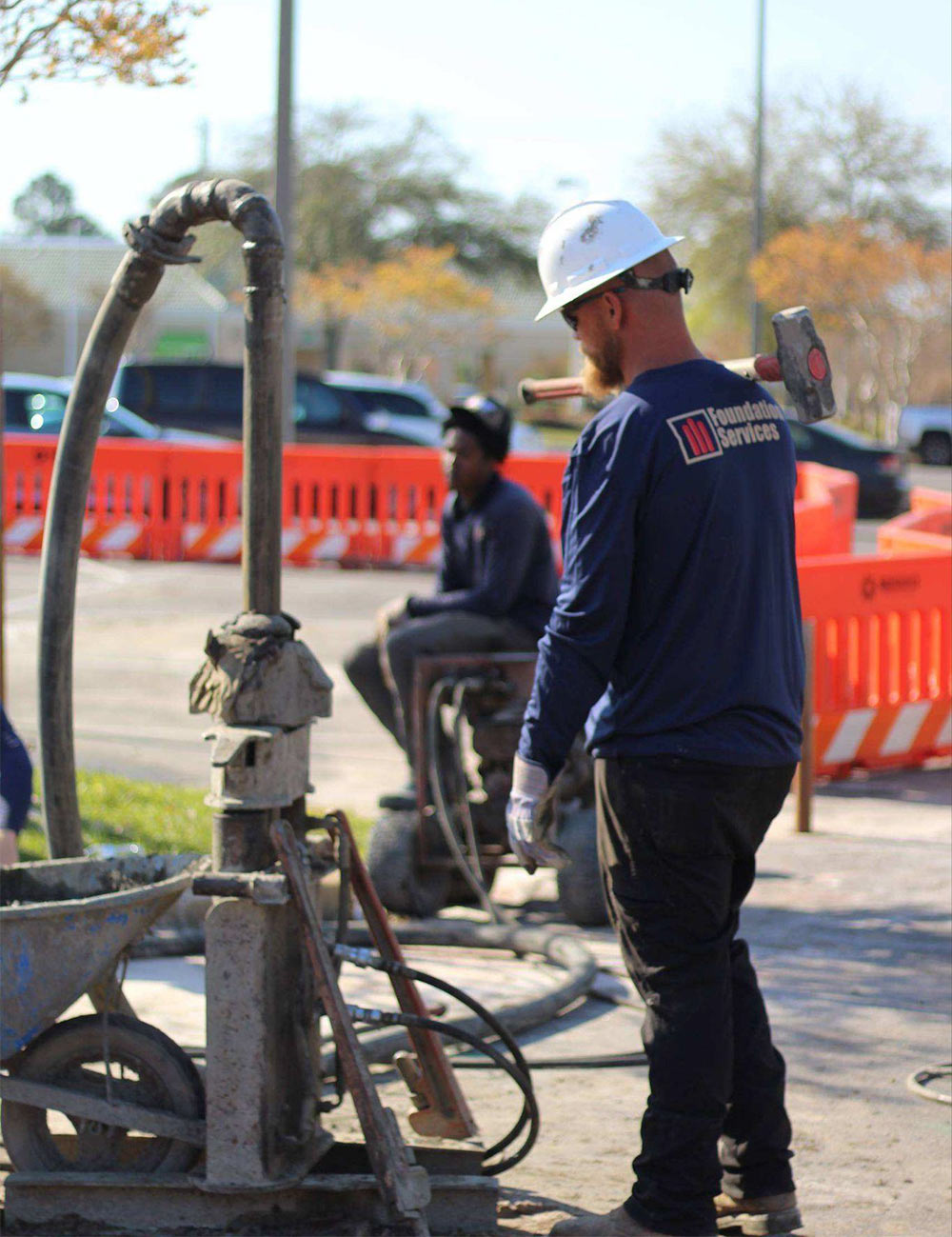 Sinkholes can develop when changes below the ground create spaces that the soil above can no longer fully support. Depending on the conditions, homeowners may notice changes in the yard, driveway, or home that warrant further evaluation.
Some possible signs of a sinkhole under your house can also occur for other reasons, including ordinary soil settlement or drainage problems. That’s why visible symptoms alone can’t confirm that a sinkhole is present. A professional evaluation can help determine what’s happening and what next steps may be appropriate.
Sinkholes can form when underground conditions change and the soil above loses support. In areas with limestone below the surface, groundwater can gradually dissolve the rock and create underground spaces. Soil may eventually move into those spaces, causing settlement or a depression at the surface.
Changes in groundwater, heavy rainfall, drainage problems, and other water-related conditions may also contribute to ground movement.
Because several types of soil movement can produce similar symptoms, determining what causes a sinkhole under a house requires evaluating the specific conditions at the property.
Sinkhole warning signs can appear in the yard, paved surfaces, or structures around a property. Possible signs to watch for include:
These signs do not necessarily mean a sinkhole is present. They can have several possible causes, so a professional assessment is important.
When soil beneath a home loses support, portions of the foundation may settle or move unevenly. Depending on the location and extent of the ground movement, homeowners may notice foundation cracks, uneven floors, or other changes around the property.
However, these symptoms aren’t unique to sinkholes. Foundation settlement, drainage issues, erosion, and other soil conditions can produce similar signs. If you’re wondering how to tell if there is a sinkhole under your house, a professional evaluation is more reliable than trying to diagnose the cause based on visible symptoms alone.
If you notice a new ground depression, sudden settlement, or other concerning changes around your property:
Knowing what to do if you suspect a sinkhole starts with taking unusual ground changes seriously without assuming their cause.
If you’ve noticed a new depression, sinking concrete, unusual ground movement, or other possible sinkhole warning signs, Foundation Services can evaluate the affected area and help you better understand what’s happening.
Contact us to schedule an assessment and discuss your concerns with our team.

Photo courtesy of Hernando Today
Known to many as “Sinkhole Capital of the World”, Spring Hill, Florida has just released a report on the effects of sinkholes on the economy. Although homes with sinkholes cause Hernando County to loose revenue on residential taxes, it seems to have no effect on the commercial growth of the County.
So what is the damage of having a sinkhole?
The market value of properties with unrepaired sinkholes are depreciated 50 percent. Once those properties are repaired, the value is increased to 90 percent of its full potential value.

 Before alerting your insurance company about your sinkhole or foundation problem, call us toll-free at 866-622-3723 to set up a FREE visual inspection of the damage to your home.
There are things you need to know about your situation that a “layman” cannot properly assess. It’s important to present your information correctly to your insurance company. Just as with an auto accident report, your detail and accuracy here can be very important in the final outcome. Also, we keep up with the frequently changing sinkhole insurance laws, practices and guidelines in Florida, so we can hep guide you smoothly through that labyrinth.

Grout has a wide array of applications, mainly in construction, due to its ability to fill gaps and make a foundation or structure more patent. Grout has also proven to be an effective deterrent to sinkholes, which are always a matter of grave concern in Florida, as its geological features provide the ideal conditions for these problems. If not executed correctly, however, grouting can be as much of a problem as the sinkholes it aims to prevent. Eric Glasser of WTSP 10News reports that the sinkhole fix to a 76-year-old woman’s home “did more harm than good.” (more…)

The sudden appearance of a hundred-foot-deep sinkhole in a Guatemala city street in 2010 alerted the whole world to the danger of these perilous pits. This small country in the Caribbean isn’t the only sinkhole-prone place in the world. Tampa Bay Times’ Caitlin Johnston reports that the danger of sinkholes is present much closer to home, with several communities in central Florida possibly sitting on top of a future hole. In fact, two thirds of all reported Florida sinkholes in recent years have occurred in just three contiguous counties, from the Tampa Bay area up through the most high risk county, Hernando, where news coverage has mentioned specific preventive sinkhole repair in Spring Hill as critical to saving homes (and possibly lives). (more…)

As geology expert Sandy Nettles says, “There’s hardly a place in Florida that’s immune to sinkholes.” This comment comes after yet another hole opened up in Seffner, the Hillsborough County, Florida neighborhood where a man was swallowed up by a sinkhole earlier this year. As shared by Daily Mail reporter Lydia Warren, this incident further proves that whenever you see the warning signs of a sinkhole opening up, you shouldn’t hesitate to call in an expert who can provide soil stabilization and foundation underpinning services to save your home.
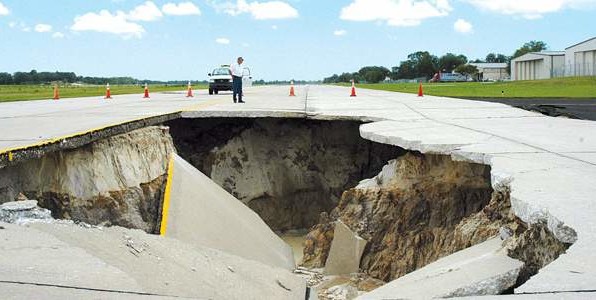
Beautiful Spring Hill in Hernando County has a disconcerting side, the unseen underground erosion activity of the limestone and other weak soils on which it is built. The probability of a sinkhole’s development in Hernando County is high due to the area’s geological composition. This is especially true in the rainy season, when more than twice the number of sinkholes occurs as in the dry period. Above is the sinkhole that suddenly disrupted a runway at the Hernando County Airport following the massive rains of Tropical Storm Debby in June 2012. While your individual risk still remains low, vigilance is important and fast action can often prevent a nightmare. (more…)


“During a time of great distress and disarray, you and your crew exhibited integrity, compassion, patience, knowledge, and kindness from the beginning to the end of the job…Most importantly, you and your crew were respectful, honest and kind…you are definitely a Man of Your Word! … We would not hesitate to refer Foundation Services to anyone.”


